How to Recognize High-Quality White Chocolate

White chocolate divides people in a way dark chocolate never does, and it is the only type of chocolate people love to insult in public without context. And honestly? I understand why people say it, because most of what’s sold as “white chocolate” in supermarkets tastes like "sweetened shortening with a vague vanilla perfume."
But here’s the inconvenient truth: WHITE CHOCOLATE IS REAL CHOCOLATE... It`s just missing the cacao solids.

It is made from cocoa butter, the natural fat extracted from cacao beans. Cocoa butter is literally part of the cacao bean. It’s not a “replacement.” It’s not “oil added later.” Depending on the variety, cacao beans can contain up to 50–54% cocoa butter by weight. Can you believe it!?
So why does white chocolate have such a bad reputation? Let me tell you: it has nothing to do with cacao and everything to do with industrial food culture.
Because the market is flooded with a version of white confectionery that’s engineered to be cheap, shelf-stable, and disgustingly sweet. And when people "eat" (not taste) that, they assume that’s what white chocolate is.
It isn’t!!!

Basically, most criticism aimed at white chocolate confuses two very different things:
What white chocolate fundamentally is, or rather should be in an ideal world.
How industrial candy companies typically make it.
How to recognize high-quality white chocolate: The only test that matters first is the ingredient list
Forget the front label. Forget “creamy,” “premium,” “Swiss,” or whatever adjective is trending today on general supermarket shelves.
Turn the bar around.
A genuinely good white chocolate usually has a short ingredient list. At its simplest, it should be made only of:
cocoa butter
unrefined cane sugar
milk powder (or a dairy-free alternative)

Chocolaterie A. Morin Peru Cahnchamayo 40% White Chocolate 
Chocolaterie A. Morin Peru Cahnchamayo 40% White Chocolate made with only three ingredients
That’s the core. Everything else, in your candy world, is either there to patch weaknesses, cut costs, or create a special effect (like a truffle center).
If cocoa butter isn’t the first ingredient, you’re not buying white chocolate. You’re buying refined sugar.
Why? Because ingredient lists are written in descending order by weight. If sugar is the leading ingredient, the product is designed to satisfy sugar cravings.
That’s not automatically “poison.” It’s just a different product category, even if the wrapper says “chocolate.”
In real white chocolate, cocoa butter ideally represents 40% of the formula (but not less than 30%). Most of the time, chocolate makers prefer single-origin natural cocoa butter (not deodorized) that retains aromatic complexity. Sugar typically falls between 35% and 40%, and milk powder (or a dairy-free alternative) around 20% to 30%.


Meanwhile, mass-market white chocolates contain 45–55% sugar by weight. That level is economically efficient and well-suited to large-scale production, but it also defines the product’s sensory profile. Sweetness becomes the primary flavor architecture with a greasy-waxy mouthfeel.

“But isn’t white chocolate basically sugar anyway?”
White chocolate is "sweet." I like to think of it as a dessert. Nobody should pretend it’s "broccoli."
But there’s a difference between real white chocolate and white confectionery that’s oversweet because refined sugar is doing all the work.
High-quality white chocolate offers more than sweetness: a natural flavor inherently tied to single-origin cacao.
And that brings us to the most misunderstood topic in white chocolate…
Cocoa butter can taste like something… unless it’s been stripped
Industrial white chocolates are made with deodorized (bleached) cocoa butter. Deodorization removes volatile aromatic compounds through high-heat steam treatment.
From a factory point of view, deodorized cocoa butter is convenient: it’s neutral, consistent, and predictable. From a taste point of view, it’s a tragedy.
Non-deodorized single-origin cocoa butter can offer a complex, refined taste: soft floral notes, delicate fruitiness, and subtle nuttiness. Not loud like dark chocolate, but present.
When cocoa butter is deodorized, the bar must derive its “identity” elsewhere. That’s why mass-market white chocolate so often leans on vanillin, artificial or generic “flavoring.”
resulting in a standardized, unappealing flavor profile across brands.


A high-quality white chocolate, on the other hand, cannot afford to be boring, and the transparently-sourced cocoa butter itself is doing the talking.

The additives that should make you pause (and what they usually mean)
This is the part where consumer conversations often become dramatic. Let’s keep it factual instead.
Most additives used in chocolate are legal, regulated, and considered safe at approved levels. The issue is rarely toxicity. The issue is what they reveal about which chocolate aisle you are in.
When you read certain ingredients, you’re not reading “danger.” You’re reading decisions about cost, texture, shelf life, and manufacturing scale.
Here’s what those ingredients really tell you.
Soy lecithin: It is a common emulsifier used in chocolate to improve flow and texture during processing. It reduces viscosity, allowing manufacturers to slightly reduce cocoa butter content while maintaining workability. From a safety perspective, lecithin is widely recognized as safe (GRAS in the United States) and has been used for decades in chocolate, margarine, baked goods, and countless other foods. Does its presence automatically mean poor quality? No. Many good chocolate companies also use lecithin. In my opinion, it is not necessary. It's not a red flag; it’s a signal of industrial standardization.
PGPR (polyglycerol polyricinoleate): It is another emulsifier. Like lecithin, it reduces viscosity, but more aggressively. It is effective at very low levels and allows manufacturers to reduce cocoa butter content further while keeping the chocolate fluid during production. It is approved for use in many countries and considered safe within regulatory limits (typically under 1% of the formulation). That said, it is primarily used in large-scale industrial production to improve efficiency and optimize costs. It is not found in small-batch chocolate.
TBHQ (tert-butylhydroquinone): It is a synthetic antioxidant preservative used to slow fat oxidation. It helps prevent rancidity and extend shelf life in fat-containing foods, including oils, crackers, frozen products, and some confections. In the United States, it is permitted at up to 0.02% of a product's fat or oil content. It is neither illegal nor classified as dangerous at approved levels. However, cocoa butter is naturally more stable than many refined vegetable oils. In well-made chocolate stored properly, additional synthetic antioxidants are unnecessary. If you see TBHQ on a chocolate label, it usually indicates a long shelf life and a focus on large-scale distribution.
And then there’s the one that matters most for white chocolate...
Vegetable fats: Vegetable fats such as palm oil, palm kernel oil, and coconut oil have different melting curves and triglyceride structures than cocoa butter. They are often used in compound coatings and confectionery products because they are cheaper and easier to work with. Regulations vary by country. In some jurisdictions, small percentages of non-cocoa vegetable fats are legally allowed in products labeled “chocolate,” as long as they are declared. In others, their use moves the product into a different legal category (chocolate-style products). When you read on the label that vegetable fats (equivalent to cocoa butter) are added to white chocolate—particularly in filled or truffle-style bars—you’re not in “real white chocolate” territory... You’re in “confectionery engineering” ground level. These fats are not inherently harmful, but they differ in nutritional value, melting behavior, and fatty acid composition. Their use alters mouthfeel, texture, and the characteristic “snap” and melting properties of real cocoa butter. In filled or truffle-style products, they are often used to achieve specific textures. In classic options, they reflect cost efficiency and processing convenience.
Bottom line, the more emulsifiers, stabilizers, and cocoa butter equivalents you see, the more likely the product was designed for shelf life, cost control, and manufacturing efficiency. You are definitely on the wrong chocolate aisle.
For example, mass-market products from companies such as Lindt may offer straightforward formulations in their classic versions (sugar, cocoa butter, milk powder, lecithin, artificial flavor). However, their truffle-style option has a different mission: it needs a soft center that melts fast. To achieve this, the manufacturer adds vegetable fats (such as coconut and palm kernel) to create the "luxurious truffle" experience. This also increases the saturated fat content by the way, and not the healthy type...

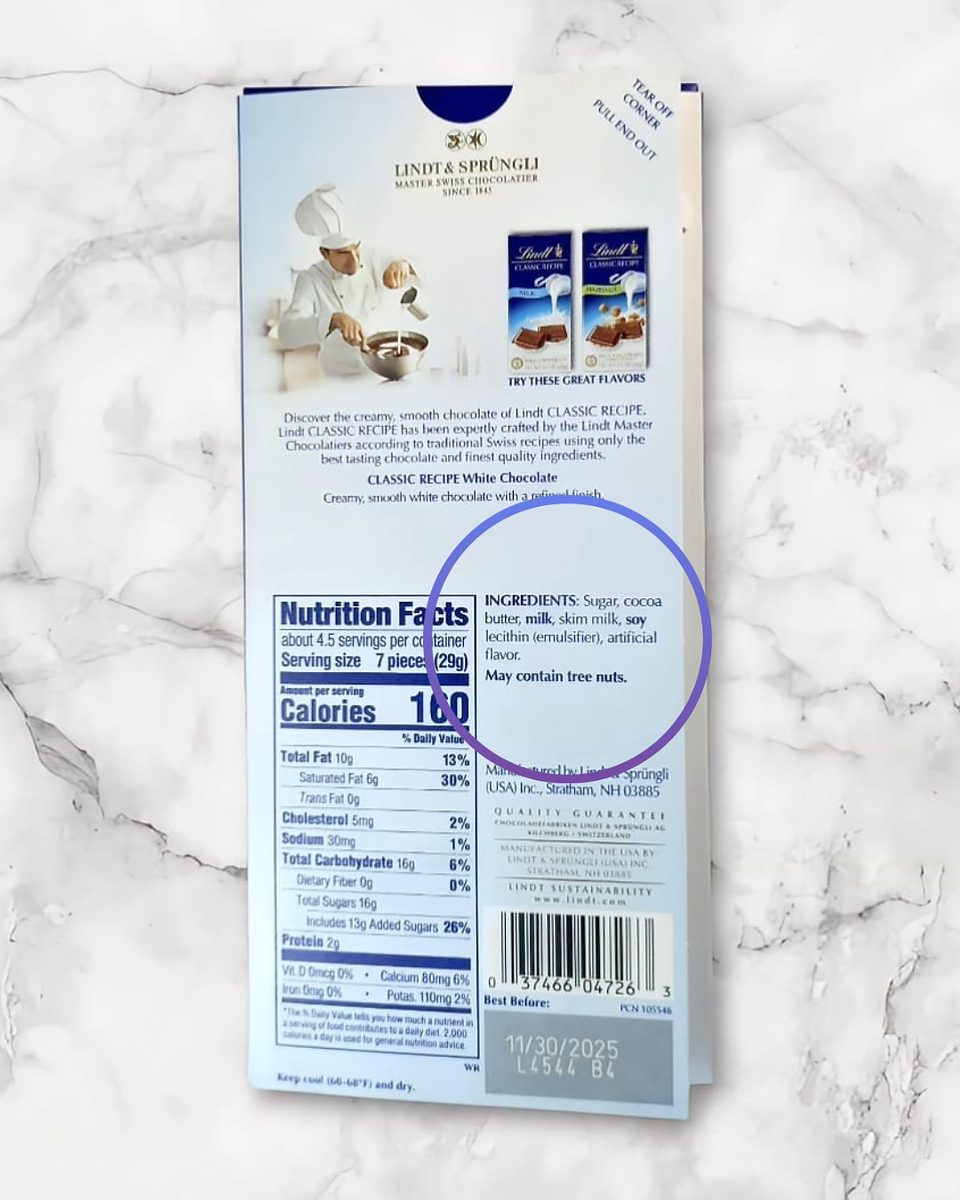

Similarly, products like the Ferrero Rocher Hazelnut White Chocolate Bar rely on palm oil and modified palm fats to create texture. With a sugar content of approximately 50–55% by weight, the recipe drivers are sweetness and creaminess rather than cacao quality or cocoa butter complexity.


This is exactly why reading the ingredient list with a bit of self-learning matters more than "blindly trusting" brand reputation.
The uncomfortable topic: heavy metals (and why “white” isn’t automatically immune?)
Most discussions of heavy metals in chocolate focus on dark chocolate, and recent reports from organizations such as Consumer Reports and certain state health departments have identified trace heavy metals in chocolate and confectionery products. So yes, white chocolate has a lower risk of contamination than dark chocolate because it lacks cacao solids. But “often lower” is not the same as “guaranteed zero.”
In January 2026, the Florida Department of Health released results from its “Healthy Florida First” initiative testing 46 candy products for heavy metals. They reported arsenic detected in 28 products.
The official list includes Hershey’s Cookies ’N’ Creme at 280 ppb arsenic, along with the program’s estimated “safe consumption” benchmarks.
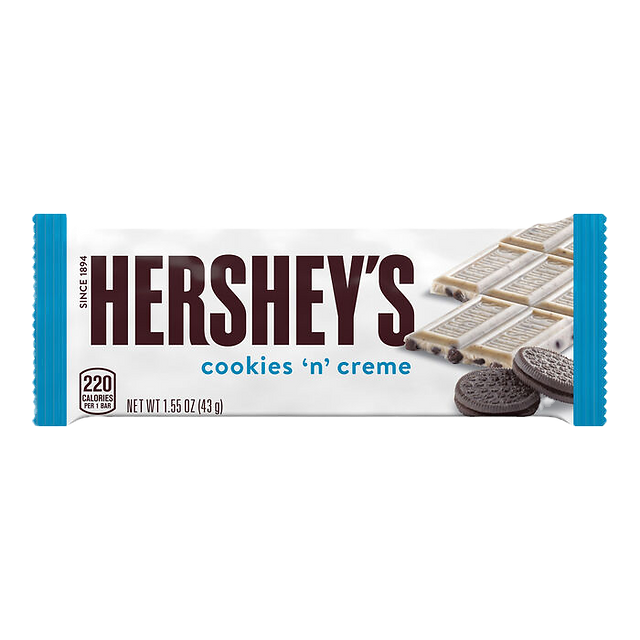

It is important to note that these consumption estimates were not federal safety limits, and aspects of the methodology and risk framing have been publicly debated by toxicologists and industry representatives. So, don’t panic-buy or panic-ban based on one table.
The takeaway is not alarmism. It is awareness. Large-scale food systems introduce complexity, variability, and environmental exposure at multiple stages of production and distribution. Contaminants cannot be detected by taste.
Consumers concerned about ingredient integrity and supply chain transparency should prioritize products with clear sourcing, shorter supply chains, and higher production standards — regardless of whether the chocolate is dark, milk, or white.
The “White Chocolate Is Unhealthy” Argument — What’s True and What’s Oversimplified
Let’s start with something obvious.
White chocolate is not a healthy food. It does not contain cocoa solids, which means it does not provide the polyphenols and flavonoids associated with dark chocolate. It is generally higher in sugar than dark chocolate, and it should absolutely be consumed as a dessert, not as a functional superfood.
This part is not controversial.
What is often misunderstood is the role of cocoa butter.
Cocoa butter is frequently dismissed as just “vegetable fat,” usually lumped together with palm oil or hydrogenated fats. That comparison is inaccurate.
Yes, it is naturally high in saturated fat. But its fatty acid profile is very specific: it is composed primarily of stearic acid, palmitic acid, and oleic acid. Unlike some other saturated fats, stearic acid has been shown in numerous studies to have a neutral effect on LDL cholesterol. Part of the stearic acid absorbed by the body is converted in the liver into oleic acid, the same monounsaturated fat found in olive oil. This metabolic behavior is one reason cocoa butter is generally considered a more neutral fat in terms of cardiovascular impact than many industrial or hydrogenated vegetable fats.
Dairy butter, by contrast, contains a higher proportion of cholesterol-raising saturated fatty acids such as palmitic and myristic acid. These are more consistently associated with increases in LDL cholesterol levels.

Cocoa butter is widely considered a high-quality fat in food science. It is structurally stable, oxidation-resistant, and does not require hydrogenation. It is still calorie-dense. But it is not nutritionally equivalent to palm oil shortenings or hydrogenated fats, as it is often simplistically portrayed. Scientifically speaking, it is not among the most atherogenic saturated fats in the human diet.
That said, from a nutritional standpoint, white chocolate is closer to fine pastry than to a functional food. And that is perfectly acceptable. Where confusion becomes more problematic is in the comparison with dark chocolate.
Many consumers assume that a 70% or 80% dark chocolate bar automatically represents “cocoa solids content” and therefore strong health benefits. In reality, especially in commercial products (where dark chocolate made with only 2 ingredients, cacao mass and sugar, doesn`t exist), that percentage refers to the total cacao content, meaning cocoa butter and cacao mass. It does not necessarily indicate high flavonoid content, especially not minimal processing.
Moreover, heavily processed dark chocolate can still be high in sugar and may contain emulsifiers, alkalized cocoa powder, and, surely, deodorized cocoa butter or, worse, equivalents.
Cacao content percentage alone does not guarantee nutritional integrity. So while it is correct that white chocolate lacks the specific compounds associated with cacao solids, it is equally incorrect to assume that all dark chocolate is automatically beneficial.
The difference is not simply “white vs dark.” The difference is in sourcing, processing, ingredient quality, and formulation philosophy.
For white chocolate, this means something simple: it should be judged as a high-end dessert, not as a supplement.
When made with high-quality cocoa butter, moderate sugar content, and specialty ingredients, it can be technically refined, gastronomically serious, and worthy of respect — even if it does not carry the health halo often associated with dark chocolate.
And perhaps the more honest position is this:
Chocolate, in any form, becomes problematic when it is ultra-processed and overconsumed — not simply because of its color.
What Actually Matters From a Consumer’s Point of View
The difference between low-quality and high-quality chocolate is not its color, nor is it the percentage printed on the packaging. And understanding how to recognize high-quality white chocolate ultimately comes down to recognizing formulation choices, sourcing transparency, and ingredient hierarchy.
In large-scale chocolate production, formulation is designed to optimize three variables: cost, rheology, and shelf stability.
To achieve this, manufacturers usually:
Increase sugar content because sugar is inexpensive and improves mass yield.
Use deodorized cocoa butter to eliminate natural aromatic variability between batches (flavor standardization).
Add emulsifiers (lecithin, PGPR) to reduce viscosity and allow lower cocoa butter ratios while maintaining machinability.
In some cases, incorporate alternative fats to modify melting behavior and reduce ingredient cost.
On the contrary, small-batch chocolate production is not built around maximizing industrial efficiency variables.
In smaller-scale manufacturing, formulation is usually determined by:
Maintaining higher cacao mass and cocoa butter ratios without needing to minimize raw material cost per metric ton.
There is no requirement to run continuous high-speed tempering and enrobing lines.
Accepting natural batch-to-batch variability instead of eliminating it through systematic deodorization. In short, there is no obligation to maintain identical flavor across global markets.
Controlling viscosity through fat proportion rather than relying heavily on rheological modifiers.
Setting sugar levels according to the intended sensory profile of a specific cacao harvest and batch, not broad-market sweetness calibration.
Operating with shorter distribution chains that reduce pressure for extreme shelf-life stabilization.
Industrial chocolate defines the standard most consumers think is normal. Small-batch chocolate proves that standard is not inevitable.
Why bean-to-bar white chocolate is different
The specialty chocolate movement approaches white chocolate from a fundamentally different perspective.
Instead of starting with neutrality and building flavor artificially, it often begins with ingredient integrity. Chocolate makers use single-origin cocoa butter—preferably non-deodorized— to preserve the cacao origin and variety identity. Ingredient lists shrink to three or four components. Artificial flavors disappear.
Sugar levels may still be substantial, but balance becomes intentional rather than dominant.
Sourcing models also differ. Many small artisans work through direct trade relationships, paying significantly above fair-trade and commodity prices. Transparency is concrete:
farm name,
harvest year,
cacao origin and variety,
fermentation and drying protocols,
step-by-step chocolate-making process.

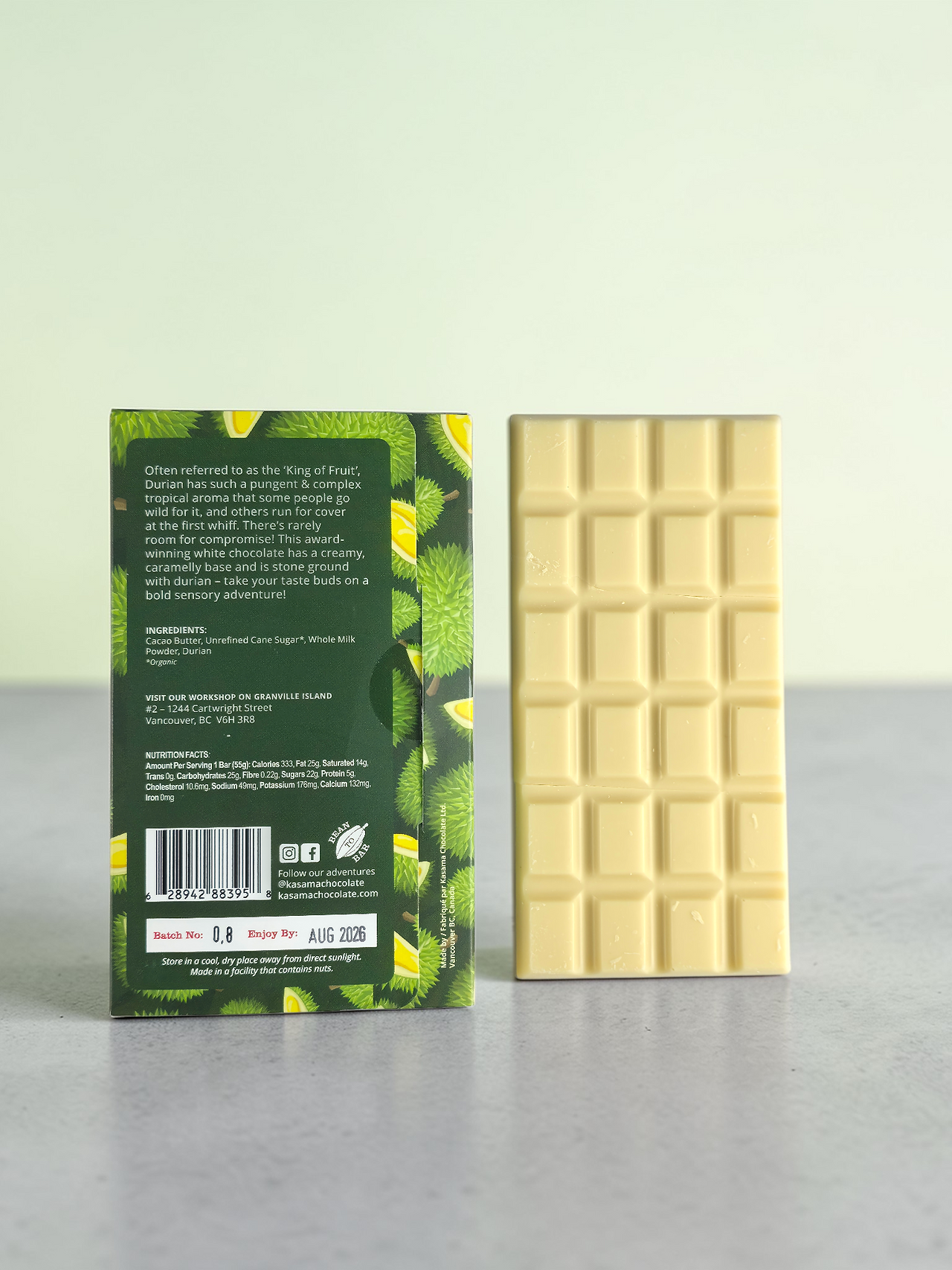

In contrast, large manufacturers operate through complex global supply networks, even when supported by certification programs.
This does not automatically make one virtuous and the other corrupt. It reflects structural differences in scale, cost, and philosophy.
Real white chocolate often has a label that looks almost boring: cocoa butter, unrefined cane sugar, milk powder (or dairy-free alternatives), maybe real vanilla.
No “flavor system.” No “creamy filling oils.” No carnival list.
And here’s the twist that most people don’t know:
Excellent white chocolate is the rarest in the world.
In fact, producing and sourcing high-quality, non-deodorized cocoa butter is expensive and technically demanding.
When you find a single-origin white chocolate with 40% natural cocoa butter, minimal sugar, and no artificial flavor, you are encountering a niche within a niche.

How it should taste (so you don’t get scammed by marketing)
High-quality white chocolate:
Melts cleanly and evenly.
Doesn’t coat your mouth with a greasy-waxy film.
Has a gentle aroma and flavor profile.
Tastes sweet but doesn't hurt your teeth.
Low-quality white “chocolate”:
Tastes like artificial vanilla frosting in bar form.
Leaves a waxy or oily mouthfeel and aftertaste.
Tastes overly sweet like cotton candy.
So what should you actually buy?
If you want a simple consumer rule that filters out the worst products fast:
Choose white chocolate where cocoa butter is the first ingredient, and the ingredient list is short enough that you can read it without taking a breath.
If you want to go one level higher:
Look for higher cocoa butter percentages (when listed), such as 40%.
Prefer single-origin cocoa butter (transparently sourced).
Avoid products with vegetable fats.
Pay attention to the “flavoring” list.
Do not look for it in generic supermarket stores.


Why Many Bean-to-Bar Chocolate Makers Avoid White Chocolate?
High-quality, non-deodorized cocoa butter is difficult to source. Furthermore, extracting cocoa butter in-house requires equipment, capital, and time that many small makers simply don’t have.
Even in the craft chocolate world, much of the high-quality cocoa butter available is still deodorized. But there is something else going on as well.
Dark chocolate has long been considered the purest expression of chocolate and, in general, healthier. Cacao solids carry the most obvious beneficial bioactive compounds like polyphenols, flavanols (epicatechin, catechin, procyanidins), and methylxanthines (theobromine, caffeine) that provide significant antioxidant, anti-inflammatory, and cardiovascular benefits. These compounds improve blood flow, reduce blood pressure, enhance brain function, and protect cells from oxidative stress. Furthermore, from a technical standpoint, yes: dark chocolate conveys the flavor complexity of fine flavor cacao more directly.
Over time, this technical truth has become an ideology.
Some chocolate makers genuinely believe that cocoa butter does not meaningfully reflect the identity of the cacao bean variety. For them, cocoa butter and, consequently, white chocolate cannot communicate origin as effectively as dark chocolate. That is why some purists produce even only two-ingredient dark chocolate: cacao and sugar, nothing else. No added cocoa butter. That is a coherent position in their line-up. But, in many cases, it is a strategic choice.
White chocolate has a poor reputation in mainstream culture because industrial versions are overloaded with sugar, deodorized and bleached cocoa butter, and artificial flavoring.
Consumers associate “white chocolate” with candy. For small makers who already struggle to explain why single-origin dark chocolate costs more than supermarket chocolate, adding white chocolate products to their selection is risky.
Will customers take it seriously?
Will they think it’s childish?
Will it undermine the brand’s “serious” image?
So many simply don’t make it.
And this is where I think the specialty sector makes a mistake.
The craft chocolate movement was built on the idea of:
educating consumers,
of challenging industrial norms,
of explaining why origin, variety, fermentation, sourcing, and the chocolate-making process matter.
But when it comes to white chocolate, too often the sector adapts to the existing prejudice instead of questioning it.
If mass-market white chocolate ruined the category’s reputation, the answer shouldn’t be to abandon the category. It should be to redefine it.
Yes, white chocolate is very different from dark chocolate in terms of taste. But high-quality cocoa butter—non-deodorized and single-origin—can still retain a subtle aromatic character.
Choosing not to explore that possibility can sometimes feel less like purism and more like caution. And caution, in an industry that claims to be pioneering, is an interesting contradiction.
If fine chocolate is truly about pushing boundaries and rethinking chocolate culture, then white chocolate shouldn’t be excluded by default. It should be reimagined. Because the real problem was never cocoa butter. It was how big corporations chose to use it.
If we only celebrate what is already socially validated, such as dark chocolate, we are not innovators—we are curators of existing taste culture.
If you’re still unsure whether white chocolate qualifies as “real chocolate,” I explored that question in depth in this article, "Is White Chocolate Really Chocolate?"


Wow 🤩